Selected Works
I
The Blasted Heath
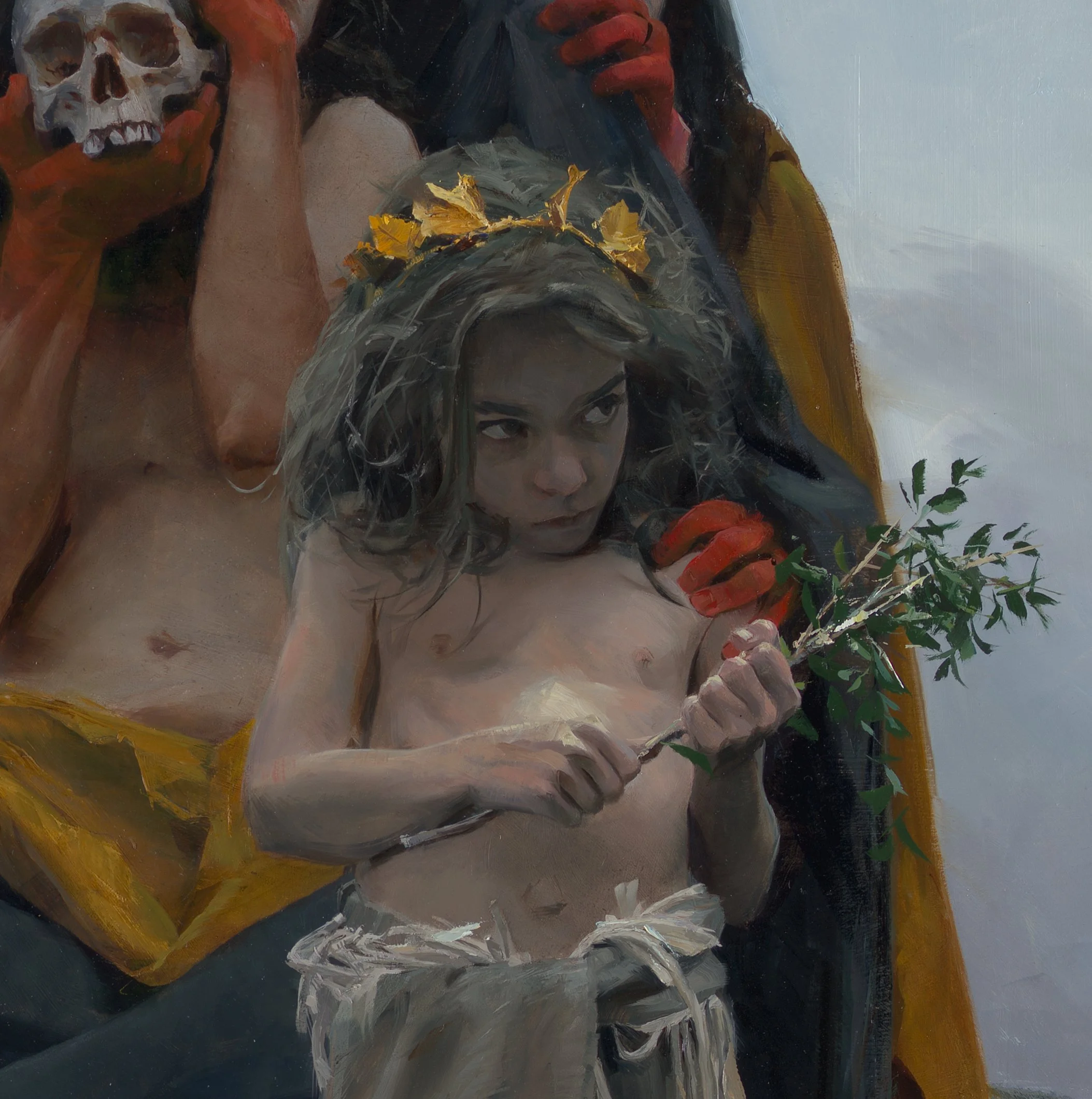
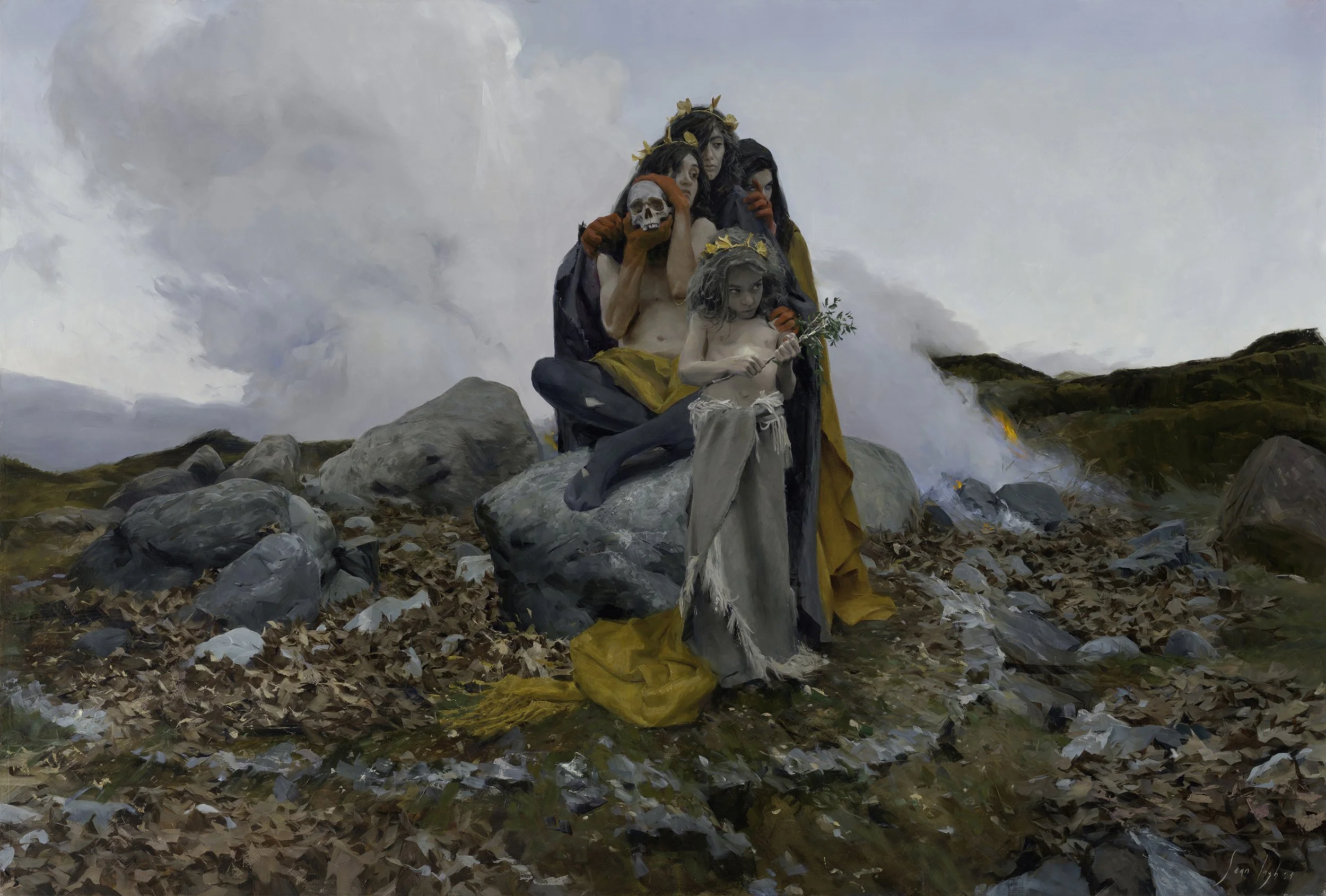
The Blasted Heath was created to transport the viewer to the desolate plain where Macbeth first encounters the three witches — the infamous ‘blasted heath’.
At the heart of the painting are the witches themselves. They represent the play’s themes of fate and the supernatural intercession, both of which fascinated Shakespeare’s chief patron, the newly crowned King James I. Their blood-red hands foreshadow the central motifs of tyranny and control, pointing to Macbeth’s descent into murder, madness, and ultimately, as symbolised by the clasped skull, his own death.
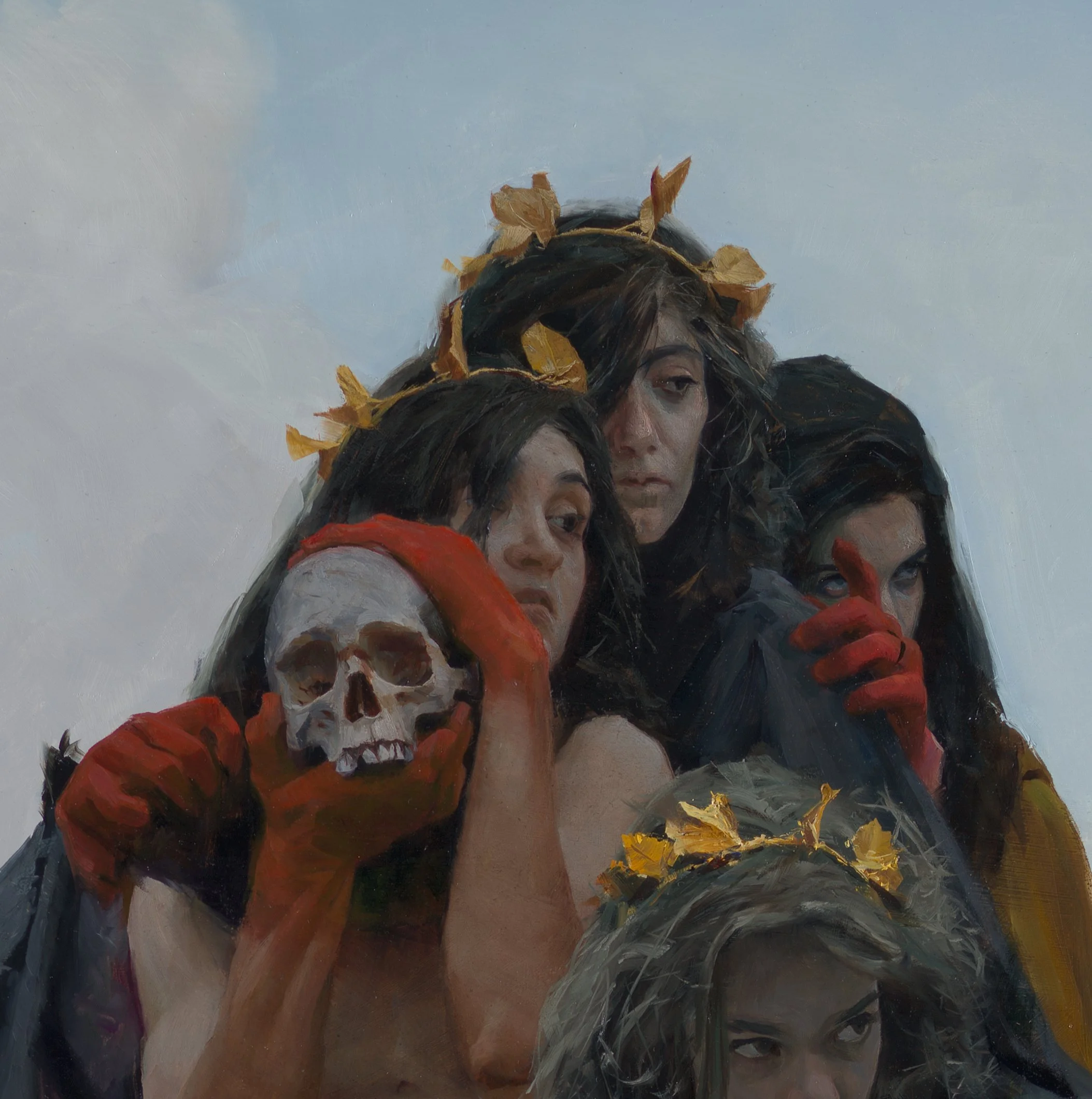
To the side stands a crowned child, wreathed in autumn leaves and clutching a small bouquet of greenery. This figure symbolises the heirs of Banquo — Macbeth’s former ally and future enemy — who are prophesied to inherit Macbeth’s stolen throne.
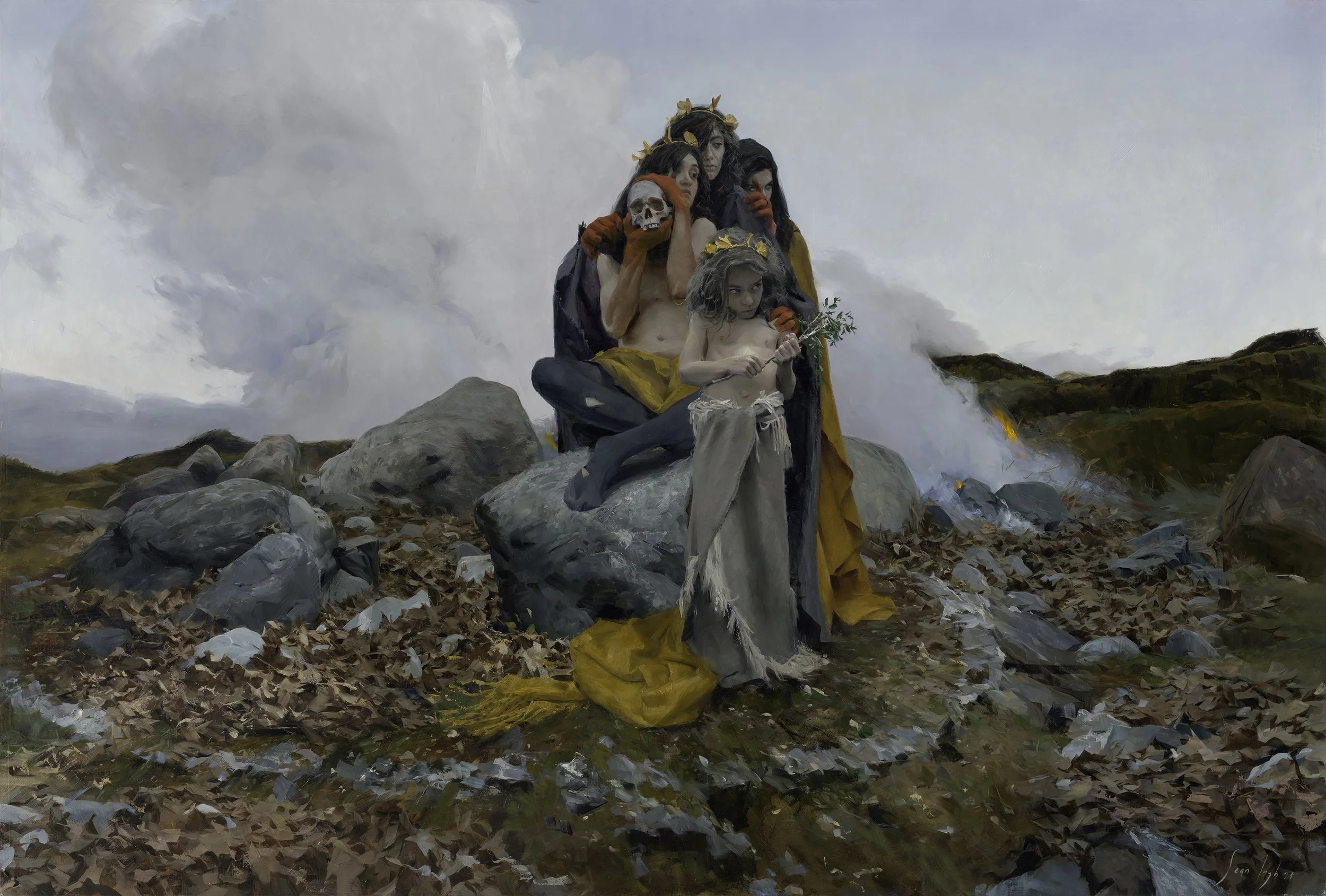
Oil on board 66 x 45 “ (169 by 114 cm)
“I paint because I believe what we inherit is worth carrying forward”
Western culture has given us an extraordinary inheritance — stories, ideas, images and ways of seeing the world developed across centuries. I am less interested in preserving that inheritance unchanged than in participating in its continuation.
Culture remains alive when we engage with it. We return to the old stories, discover something in them that still speaks to us, and give them new forms through which they can be encountered again.
I paint because I believe what we inherit is worth carrying forward.
I draw on the literature, mythology and visual traditions that have shaped the culture I inherited — from Greek tragedy and Shakespeare to the great painters who came before me. I take these things seriously, but not reverentially. I want to enter into conversation with them, to discover what they might still have to say, and to add something of my own.
There is enormous joy in this process: receiving something of value, spending time with it, transforming it, and passing it on.
I think often about the cultural world my daughter will inherit. I hope these stories and ideas remain available to her; not as relics, but as living things she can encounter, question and make her own.
II
Antigone
“Antigone depicts the tension between private morality and public law”
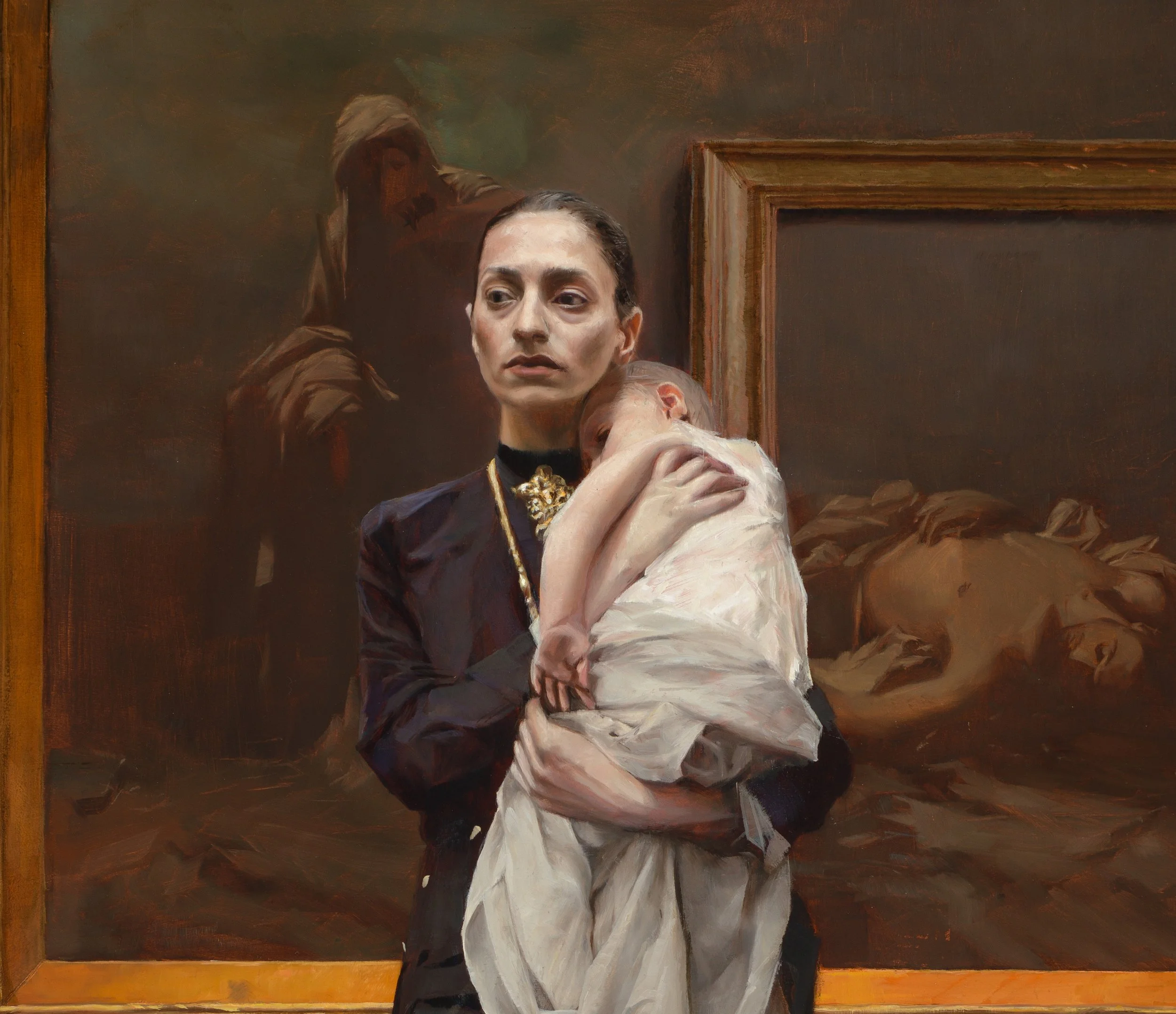
This painting reimagines Sophocles’ tragic heroine Antigone, shown standing defiantly in a grand, ruined gallery, and focuses on the tension between private morality and public law. Antigone cradles a child — an imaginative reference to her son, who appears in the lost Euripidean play, ‘The Epigoni’ — as she is condemned to death by the State for burying her treasonous brother, Polynices.
Behind Antigone hangs the painting ‘Antigone in front of the dead Polynices’ (1865) by Nikiforos Lytras, anchoring the work within an art historical tradition. The empty frame and scattered pages evoke a disintegrating social structure. At its heart this painting depicts the tension between private morality and public law.
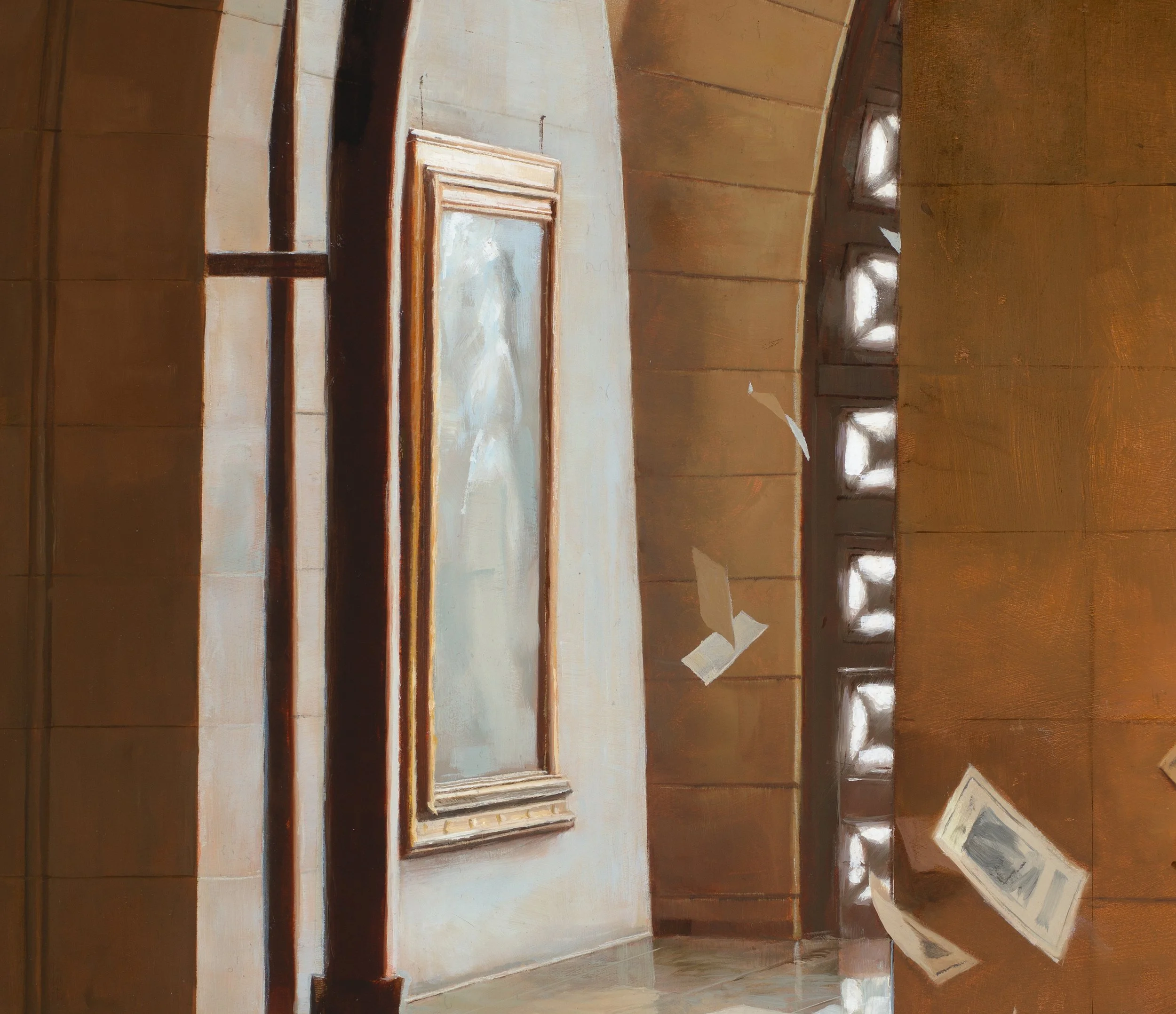
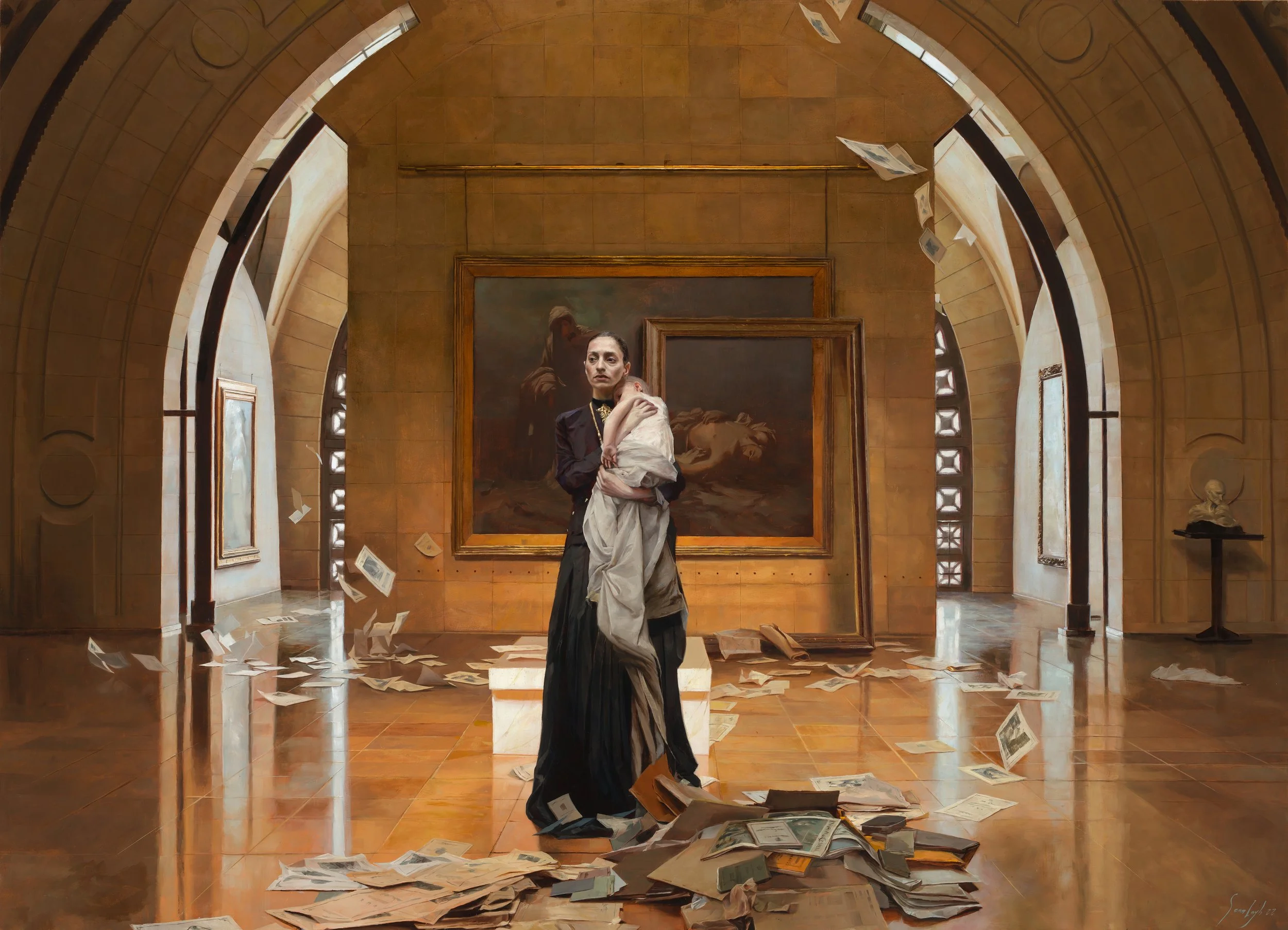
Oil on board 39 by 55” (100 by 140 cm )
III
Oedipus at Colonus
This painting reimagines Oedipus at Colonus, the final play in Sophocles’ Theban trilogy. Oedipus, the exiled king of Thebes, is portrayed in the twilight of his life as he seeks refuge in the sacred Athenian grove of Colonus. Framed by dusk and stone, Oedipus appears as a figure of solemn resolve — a man who is cursed by fate, but unyielding in his defence of moral integrity.
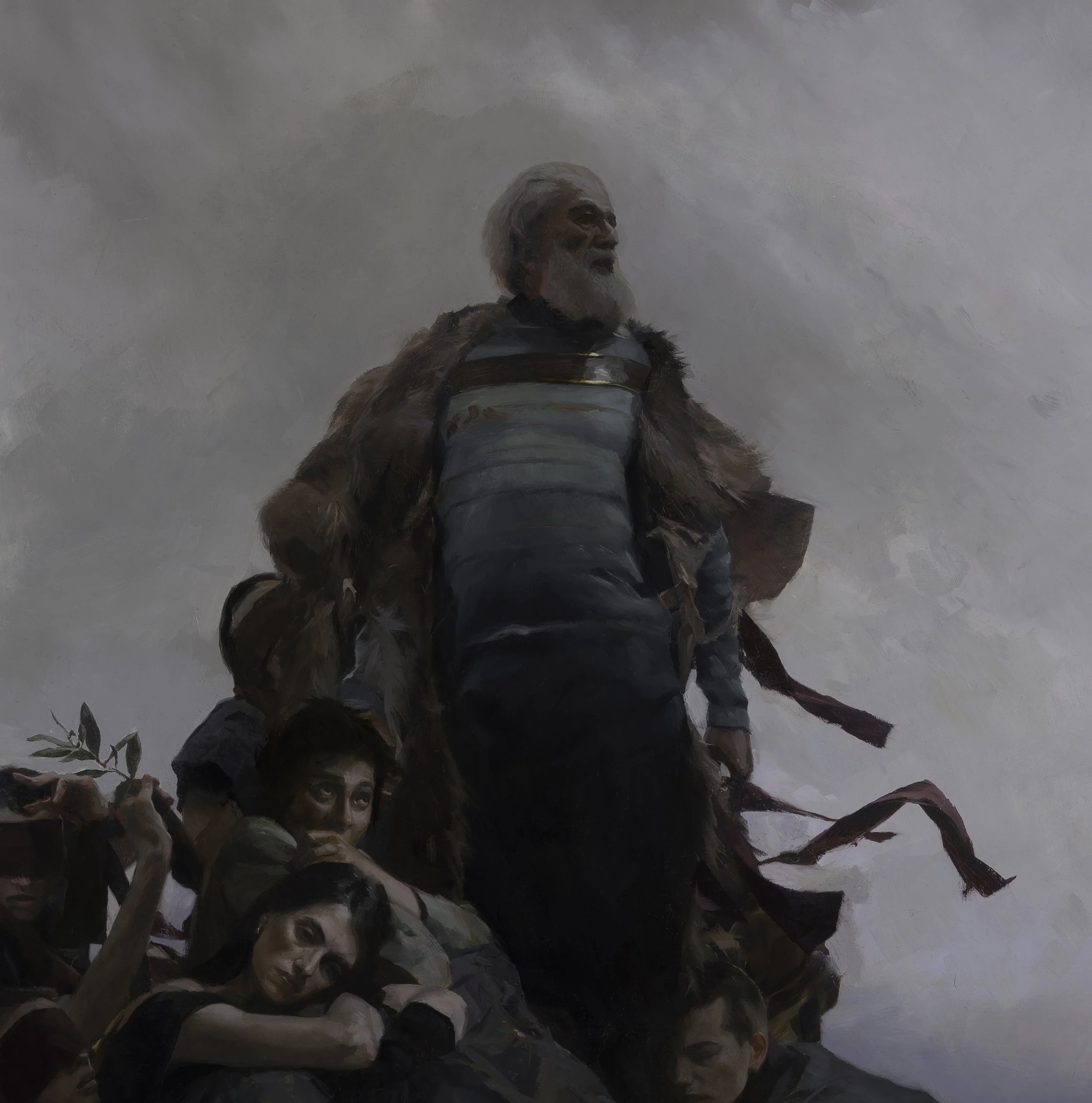
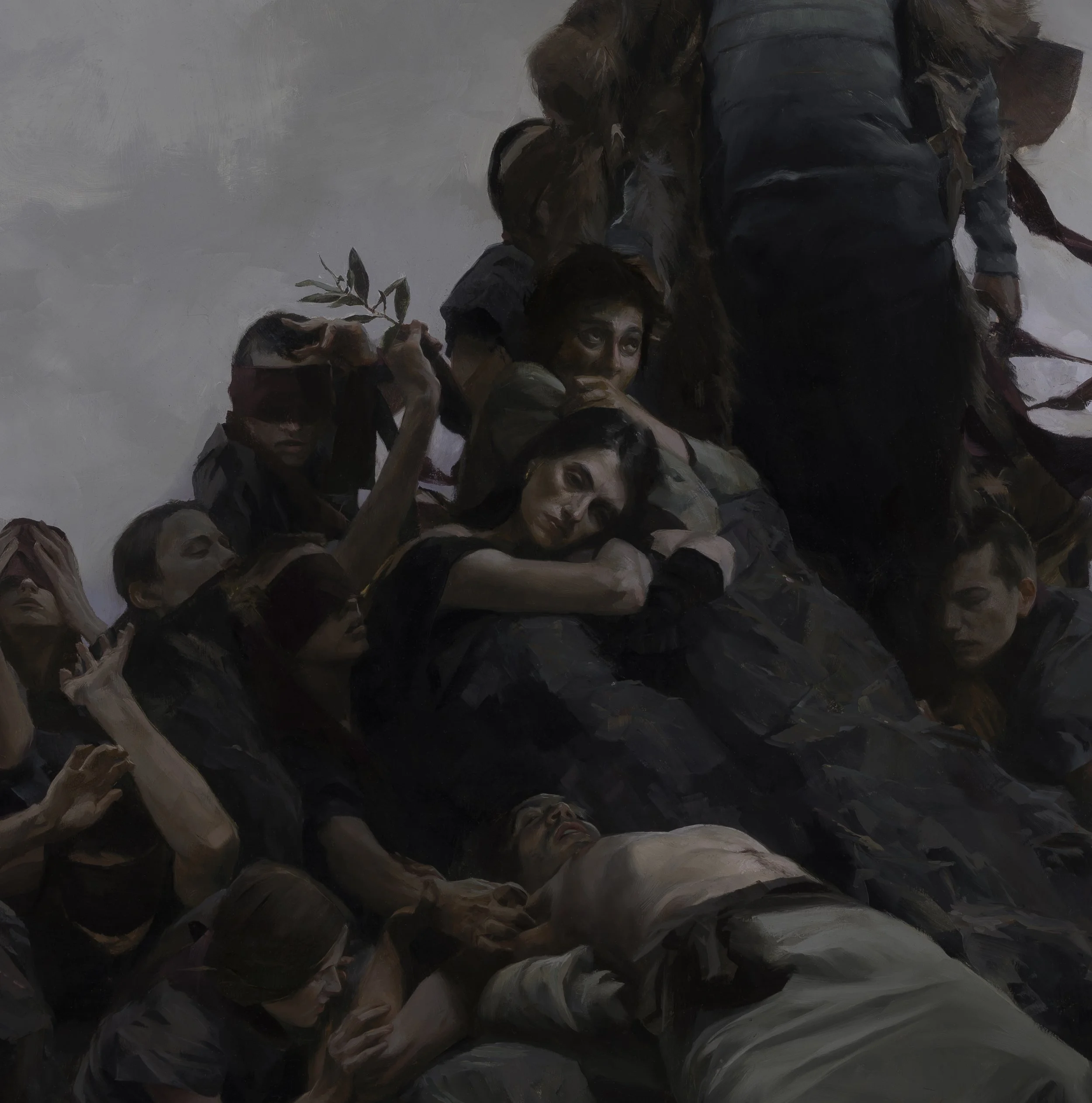
“... Oedipus explores the enduring tension between predestination and human agency”
Beneath him stand his daughters, Antigone and Ismene embodying the bonds of kinship that endure despite catastrophe. In contrast, Oedipus’ estranged son Polynices is dragged across the rocks by a chorus of veiled women. These spectral figures are the Eumenides; the ancient Greek agents of divine retribution.
The painting centres on Oedipus’ unwavering claim to innocence and explores the enduring tension between ideas of predestination and human agency, and the search for dignity amidst a troubled life.
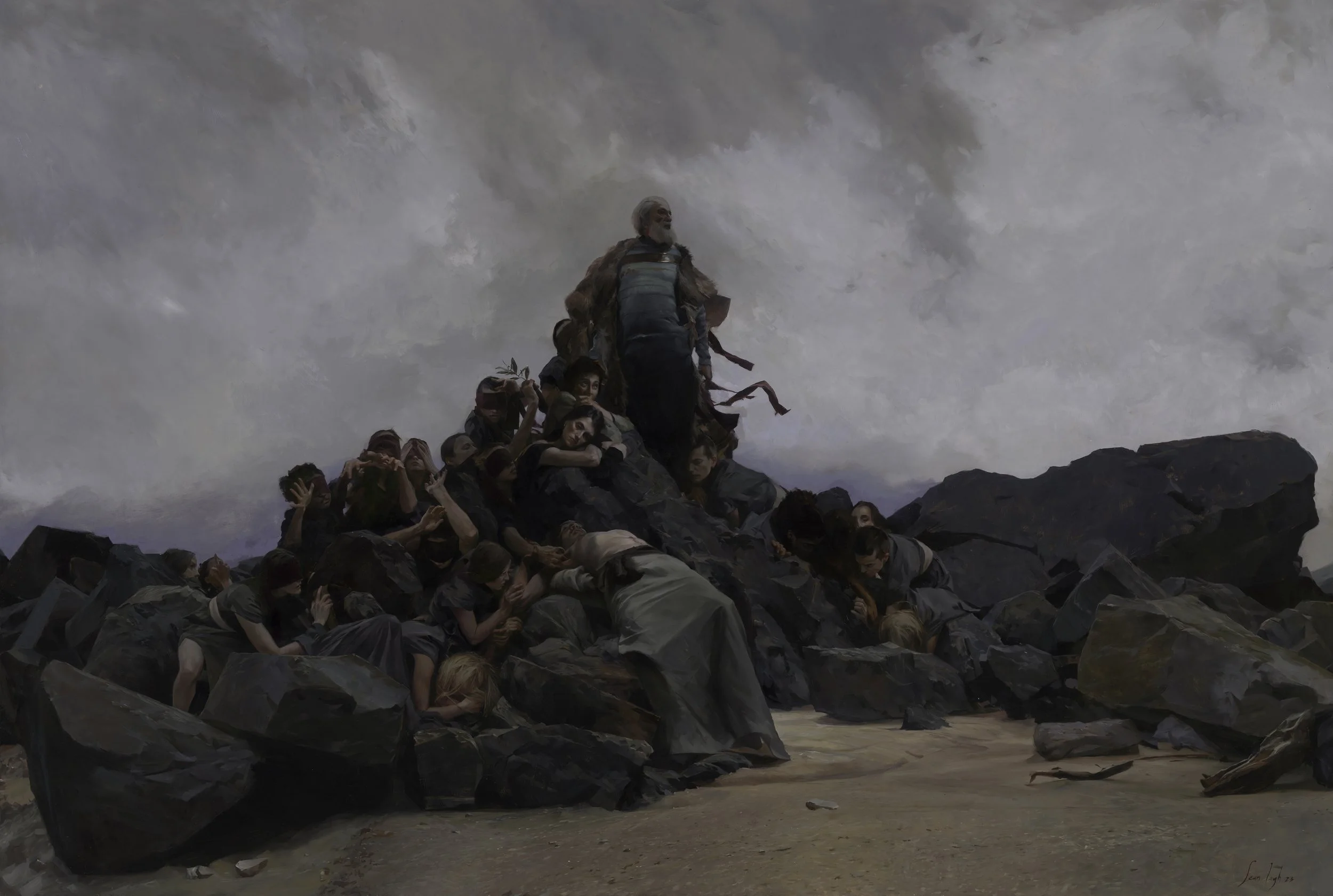
Oil on board 66 by 45” (169 by 114 cm)
IV
Scheherazade
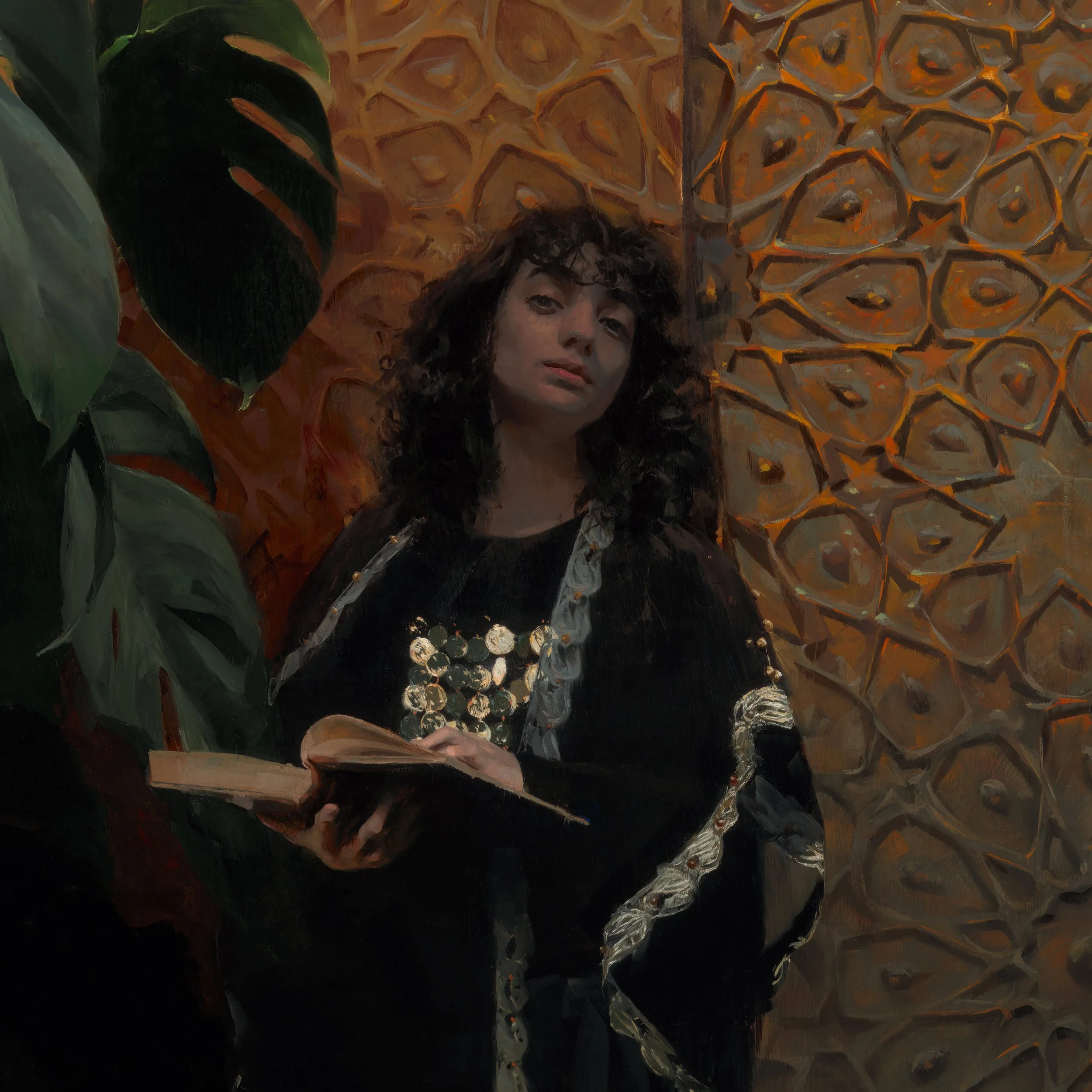
This painting draws upon the storyteller heroine of The Arabian Nights, Scheherazade. Her tale begins in the court of Sultan Shahryar who takes a new bride each night only to have her executed by dawn.
Summoned to the palace, Scheherazade weaves a tale so alive with wonder and intrigue that the Sultan delays her execution desiring to hear its conclusion.
So begins a thousand and one nights of storytelling, during which Scheherazade weaves together fables, histories, and dreams, each evening postponing death through the power of narrative.
Through wit and patience, Scheherazade reforms the man who once wielded power with cruelty.
This work seeks to embody that transformation — to reflect Scheherazade’s intelligence, resilience, and quiet defiance. Her story endures as a testament to the redemptive force of imagination, and to the courage required not only to survive, but to shape a more merciful world.
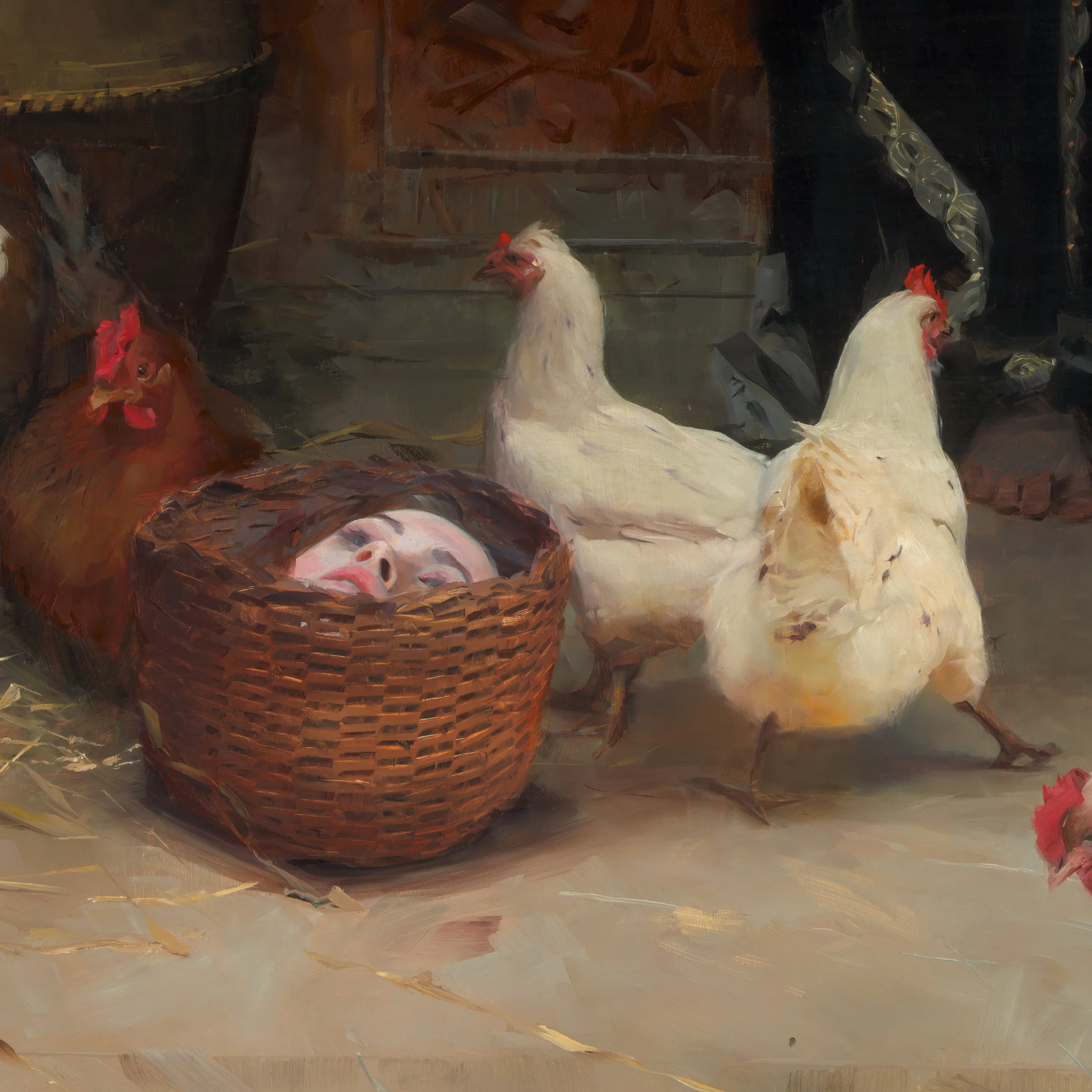
“Her story endures as a testament to the redemptive force of imagination”
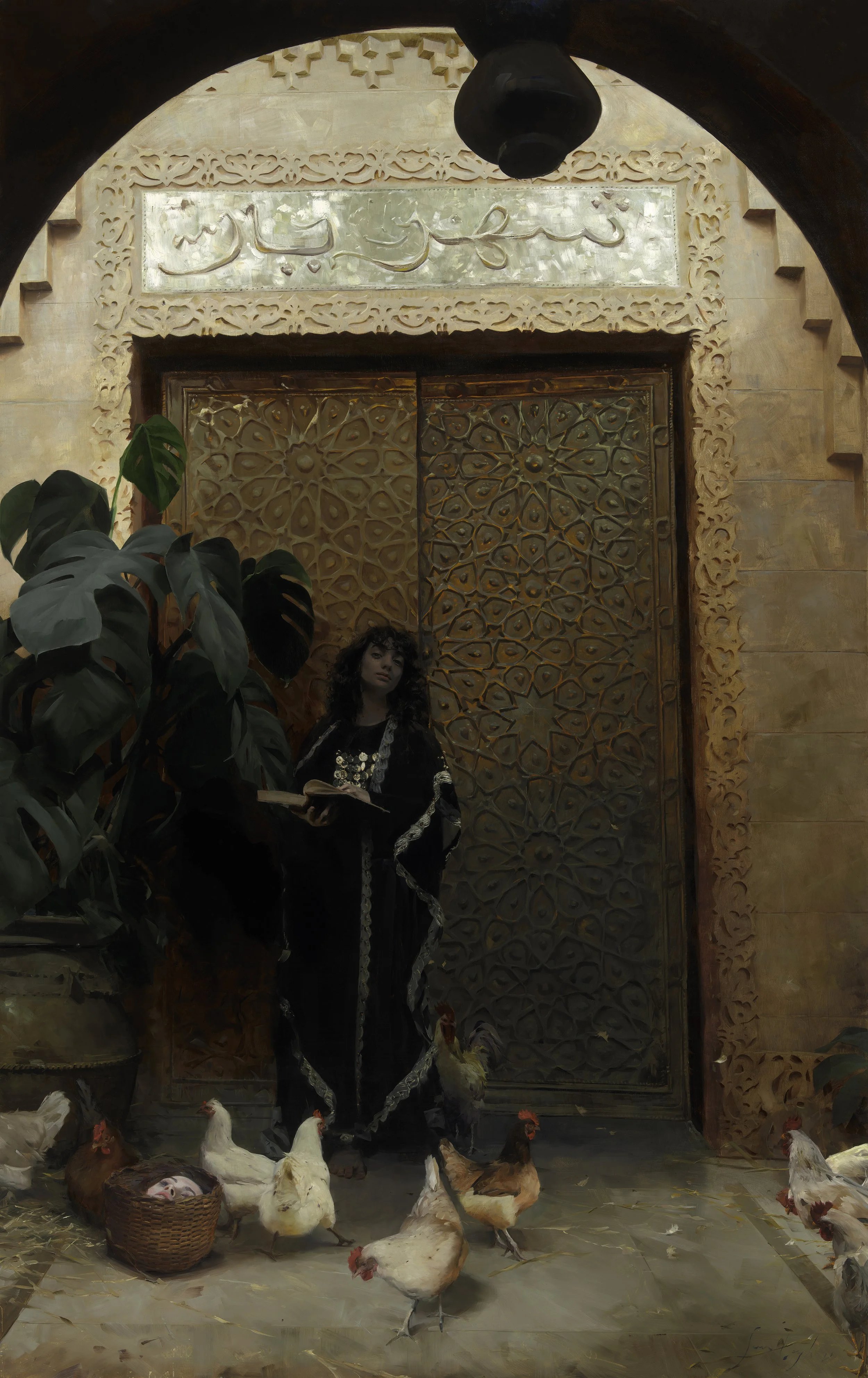
Oil on board 58 by 37” (149 by 94 cm)
V
Icarus Fallen
This painting reimagines the myth of Icarus, not at the moment of flight or fall, but in its quiet aftermath. Washed ashore amid jagged rocks and restless gulls, the figure lies motionless, neither clearly dead nor alive.
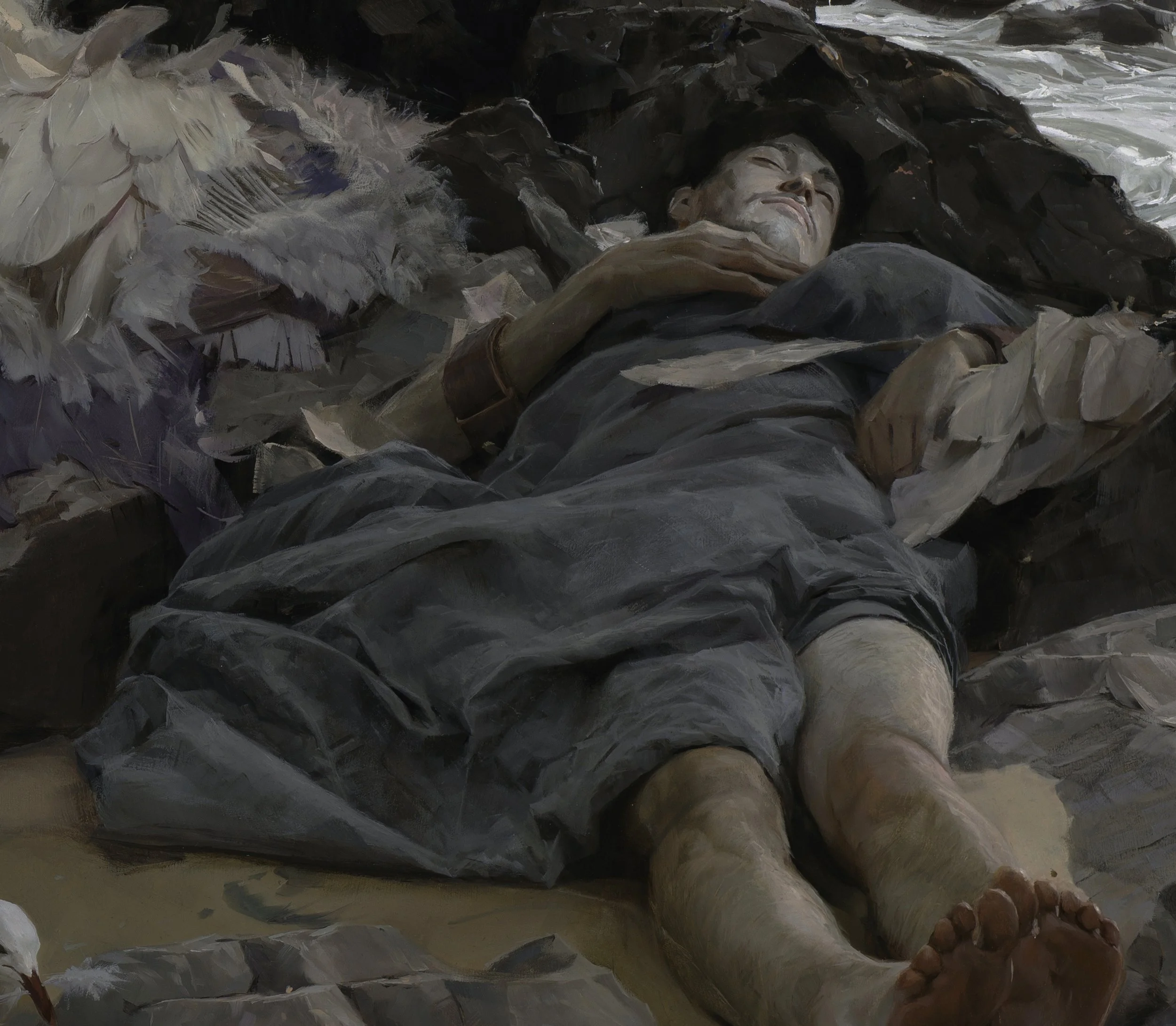
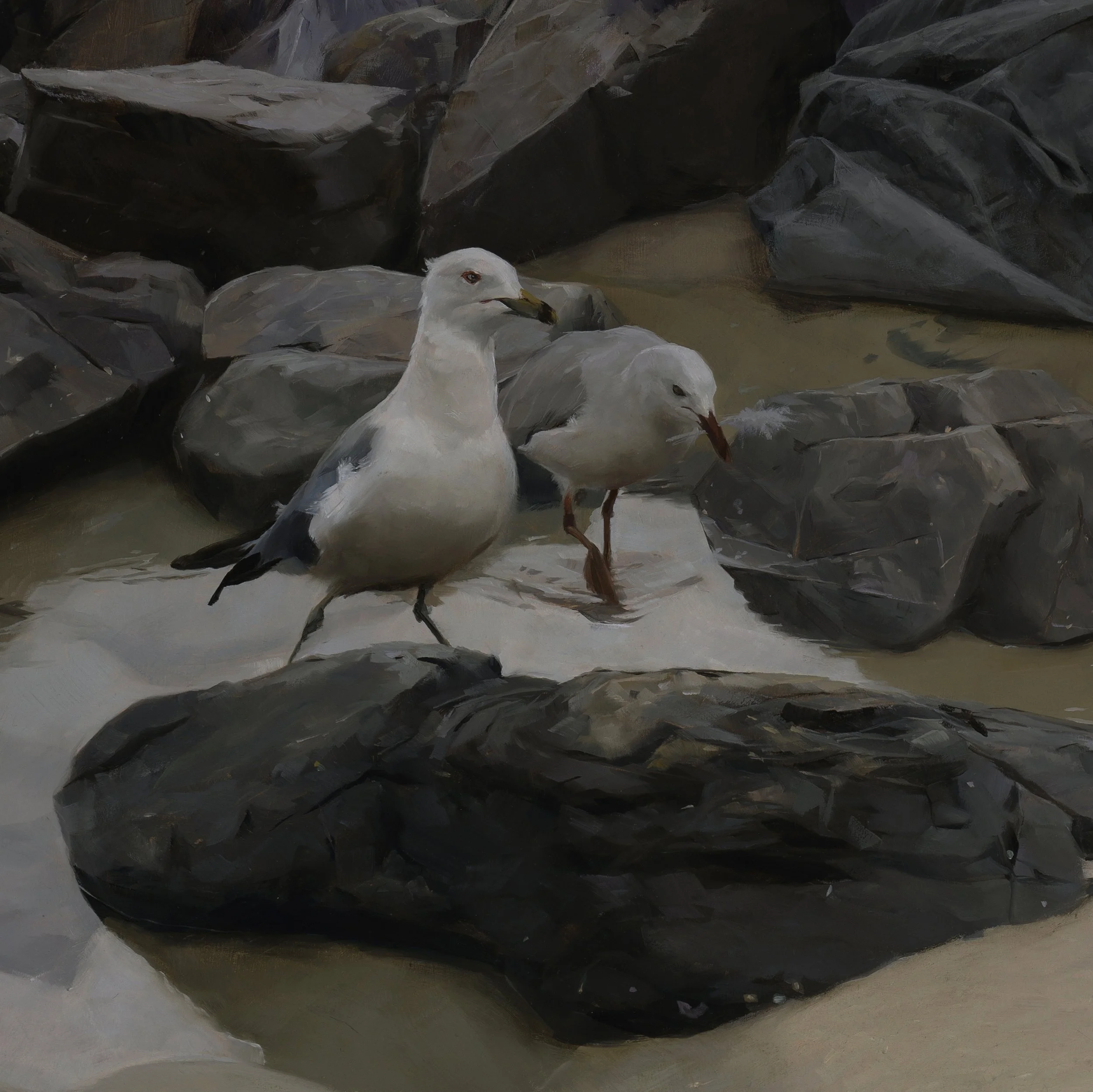
“The painting invites reflection on what comes after collapse...”
Inspired by Chantal Delsol’s philosophical masterpiece ‘Icarus Fallen’, the work meditates on the fate of the modern individual in the absence of transcendent ideals. Here, Icarus becomes a symbol not of hubris, but of disorientation—stripped of certainty, cast down without clarity, and left in the silence after the descent. The painting invites reflection on what comes after collapse — when heroic narratives fail and we must navigate meaning from the ground up
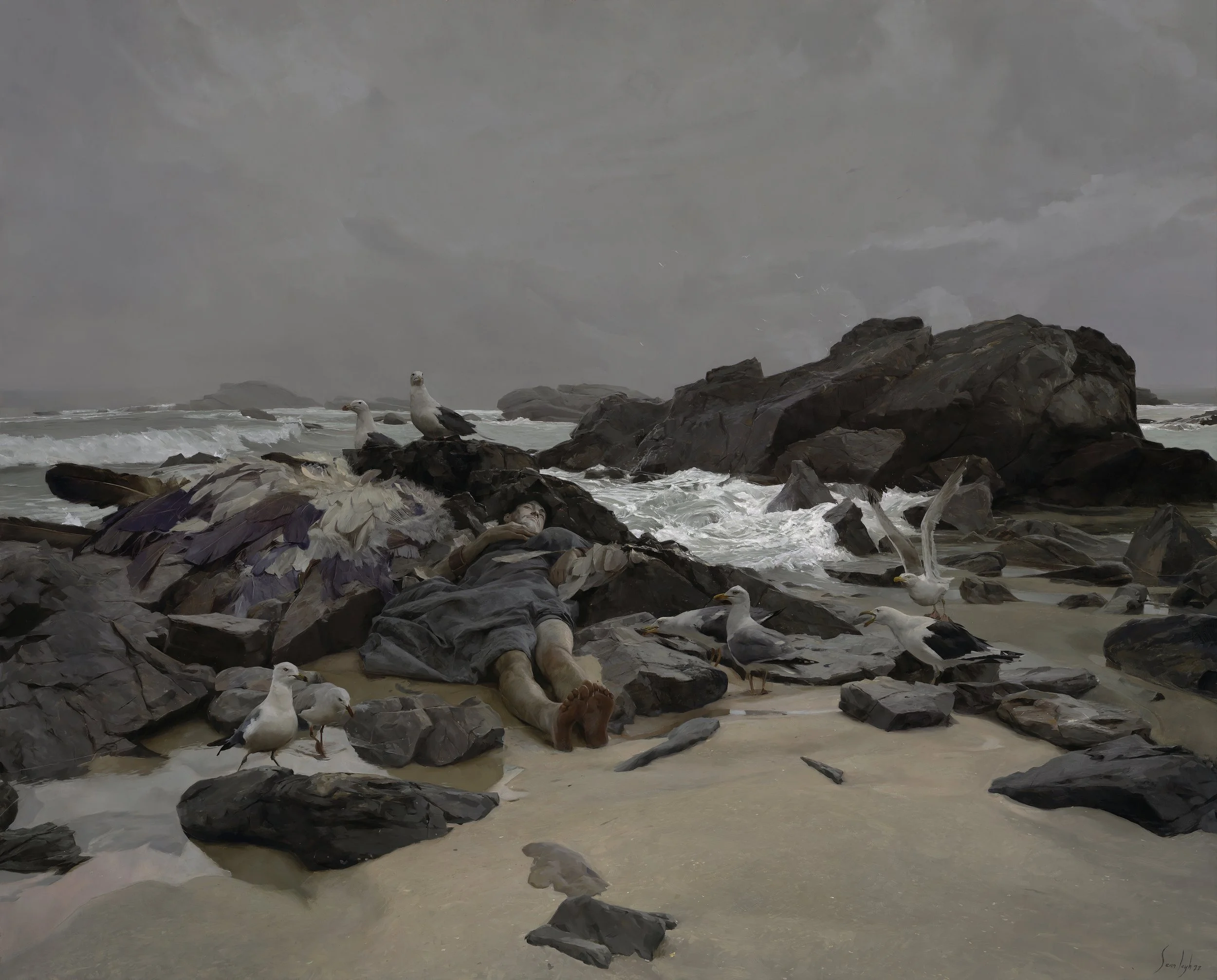
Oil on board 66 by 45” (169 by 114 cm)
VI
The tragicall historie of Hamlet, Prince of Denmarke
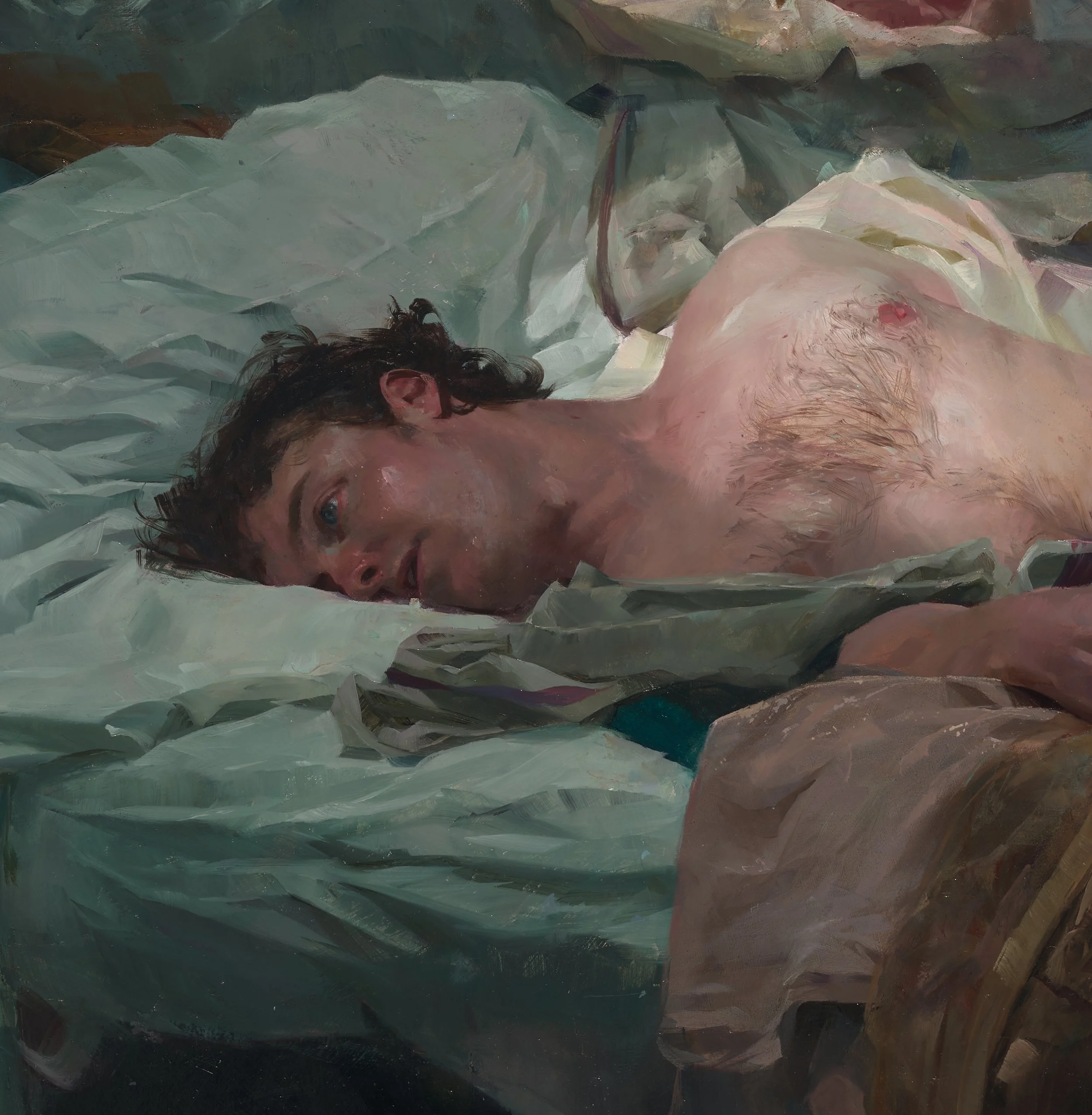
“His four famous soliloquies stand as deeply accurate explorations of common human experience”
The subject of this painting is Shakespeare’s Hamlet. The mercurial prince of Denmark who — upon being exhorted by his father’s ghost to avenge his murder — slips into existential introspection and inaction.
Hamlet’s deeply personal musing on life, death and morality lead him into a labyrinth of failed plots and misdirection, cumulatively leading to the death of all those near and dear to him. His four famous soliloquies stand as deeply accurate explorations of common human experience.
Once I stripped the painting of its obvious props (swords, poisoned chalices et cetera), the scene focused more on Hamlet's melancholy and inability to act than any of the grand narrative.
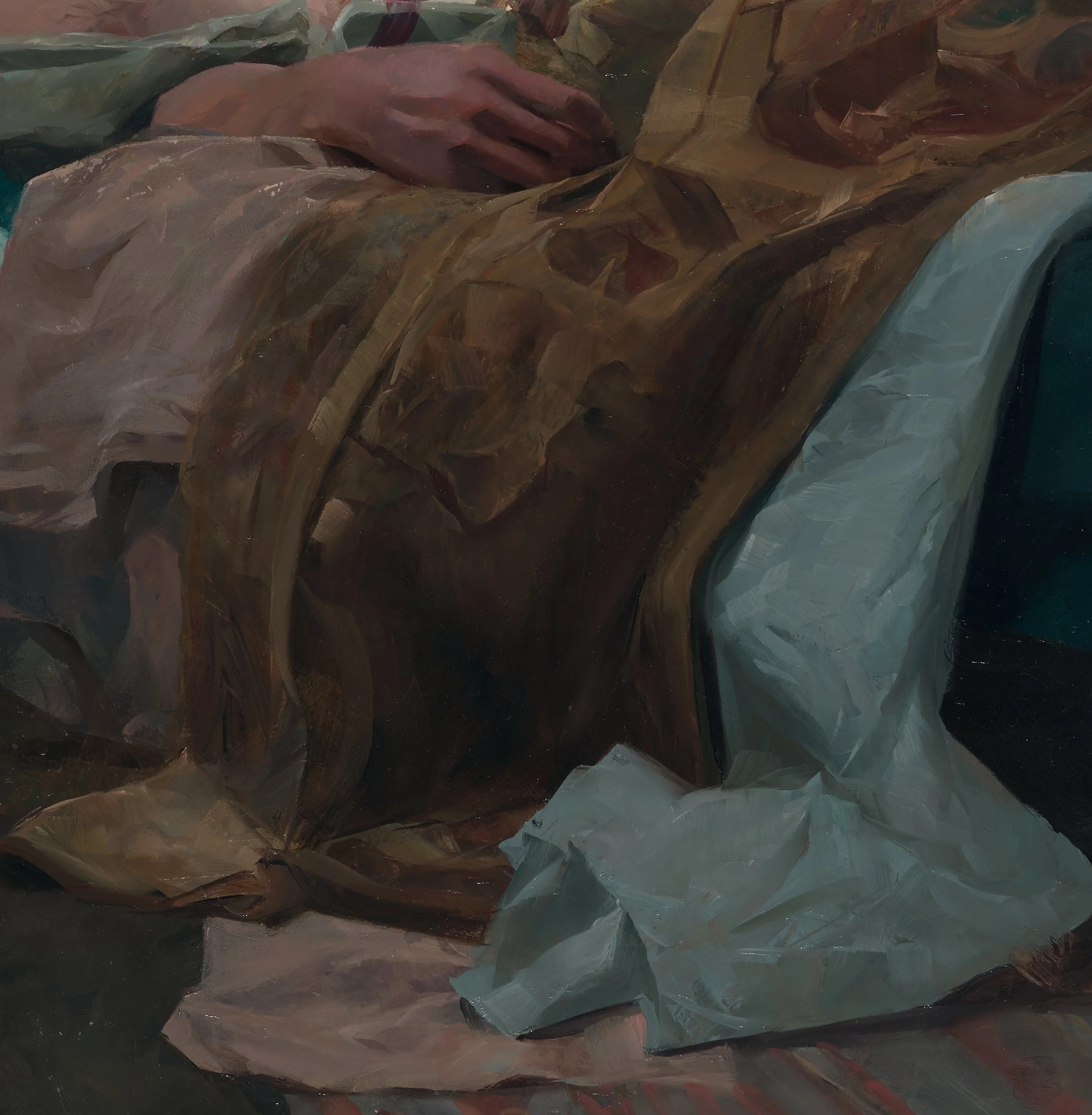
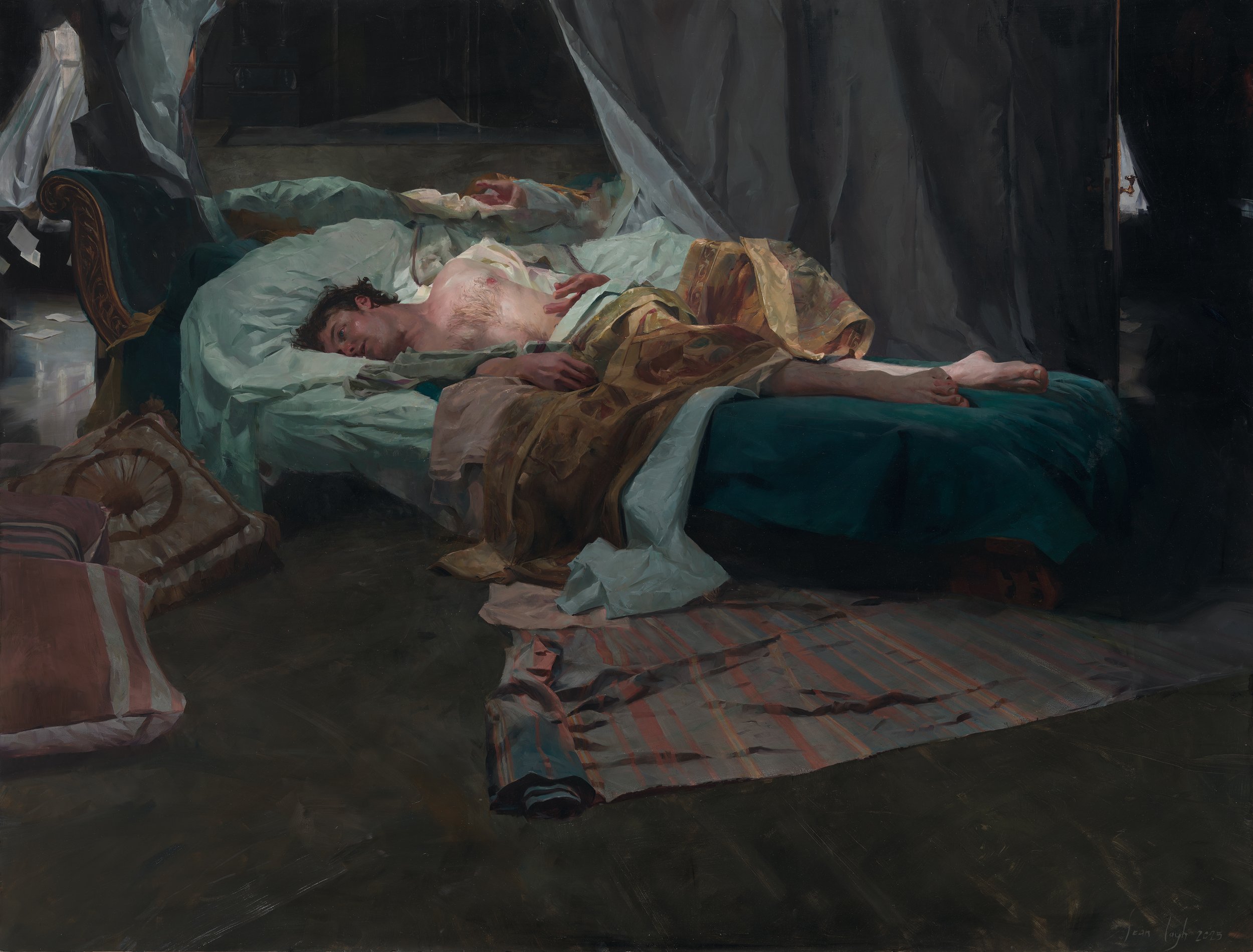
oil on board 45 by 59” (114 by 150 cm)
Want to join the collector’s list?
Please fill out your details below and you’ll be among the first to know when new works become available.